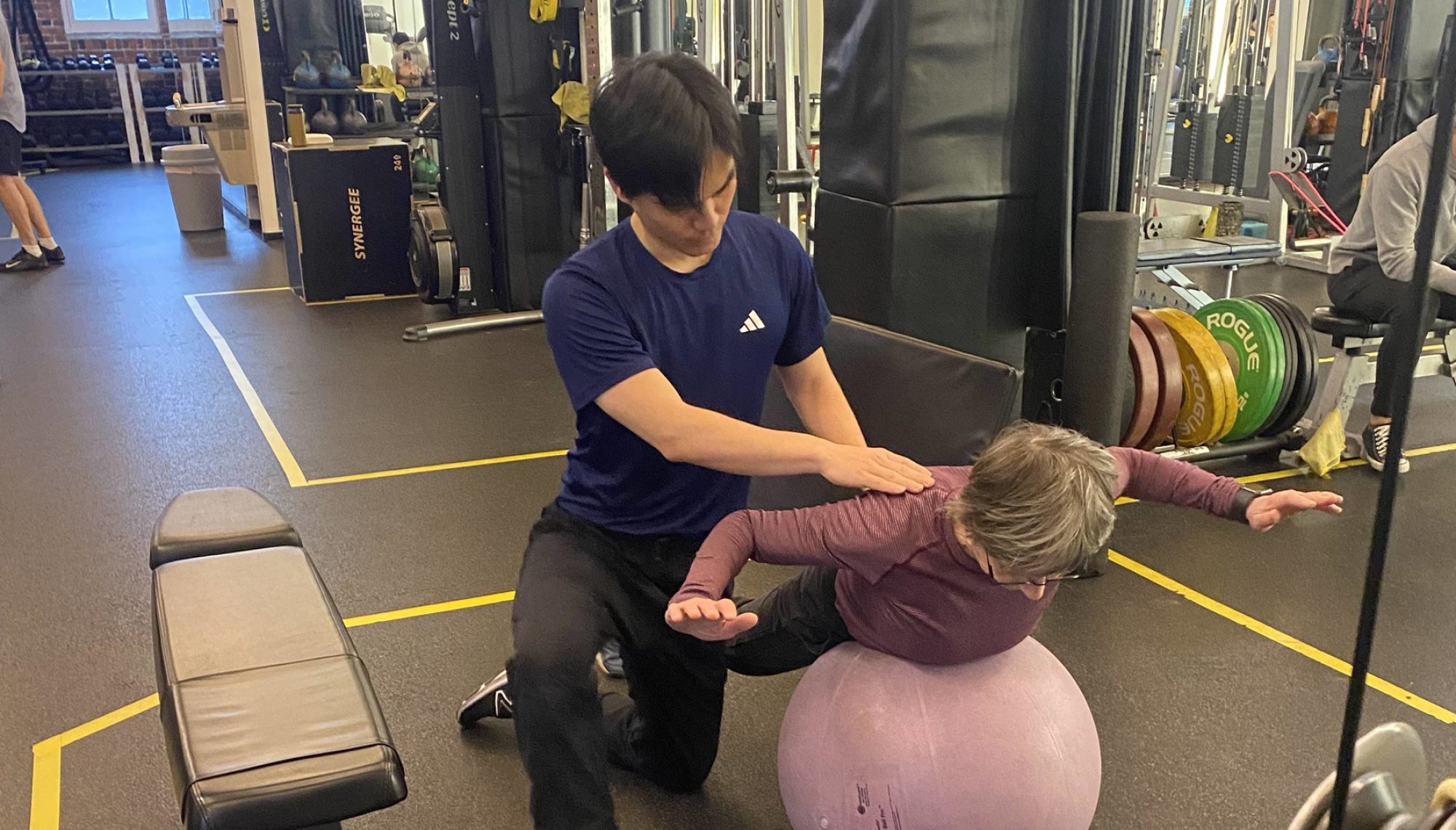
In Part 1, we introduced Upper Cross Syndrome and its postural effects. Here, we’ll examine how strength and endurance training affect posture correction, and why endurance-based exercises are better suited for addressing UCS.
Fall Prevention: Building Balance with Strength Training
Falls are a significant concern as we age, often resulting in injuries that can impact independence and quality of life. Preventing falls starts with understanding how our body maintains balance and incorporating effective exercises into our routine.
In this post, we’ll explore the importance of building strength—specifically in the gluteus maximus—and how it plays a crucial role in balance and fall prevention.
Understanding Upper Cross Syndrome and Why Training Matters
Upper Cross Syndrome (UCS) is a common postural condition caused by an imbalance between tight and elongated muscles in the upper body. Often leading to a kyphotic (rounded upper back) posture, UCS can result in discomfort and mobility issues if left unaddressed. Correcting this condition requires a thoughtful approach to training.
In this two-part series, we’ll explore the importance of understanding UCS and how endurance-based training can effectively improve posture.
The Impact of Sit-to-Stand Training
As sedentary lifestyles become increasingly common, the need for simple and effective exercise interventions has never been greater.
This blog post explores the findings of a study that compares the effects of different sit-to-stand training programs on muscle architecture and function in sedentary adults. Additionally, we delve into the technique of the squat sit-to-stand exercise, highlighting its benefits and necessary precautions.
5 Spine-Friendly Rotational Exercises for Your Workout Routine
Rotational movements are essential for core strength and overall functionality, but they must be performed with care to avoid undue stress on the lumbar spine.
In this post, we’ll discuss five rotational exercises that prioritize spinal health while building strength and stability.
The Benefits of Side Lunges for Muscle Targeting and Functional Fitness
Side lunges are an effective exercise that targets multiple muscle groups and improves overall functional fitness.
This blog post explores the benefits of side lunges, examines a study comparing forward and side lunges, and provides insights from an athletic standpoint on incorporating side lunges into your training routine.
Why Rotational Movements Matter
When planning a workout routine, it’s essential to consider the five fundamental human movement patterns: squat, single-leg, push, pull, and rotation. Among these, rotational movements are often overlooked or executed incorrectly, despite their importance in building core strength and enhancing overall functionality. However, not all rotational exercises are created equal, and some can do more harm than good.
In this post, we’ll explore why rotation is essential, the dangers of certain exercises like the Russian twist, and smarter, spine-friendly alternatives.
Safely Assisting a Loved One to Stand from a Chair
One of my clients has been helping her mom stand from a chair. She mentioned that occasionally she experiences low back pain. This prompted me to explore the best approach for assisting someone in this situation to minimize the risk of injury. Here’s what I found.