One of my clients came to me with persistent lower back pain, particularly during daily activities rather than exercise. After a thorough assessment, we discovered that his SI (sacroiliac) joint was jammed, leading to movement imbalances and discomfort.
Exercises to Avoid for Better Posture
Posture plays a crucial role in overall health and movement efficiency. While exercise is essential for improving posture, some movements can actually make it worse. If you struggle with poor posture, it is important to choose exercises that support proper alignment rather than reinforce imbalances.
In this article, we will discuss common exercises that can negatively impact posture and explain why you should avoid or modify them.
How Strength Training Helped My Client Improve Her Posture with Osteoporosis
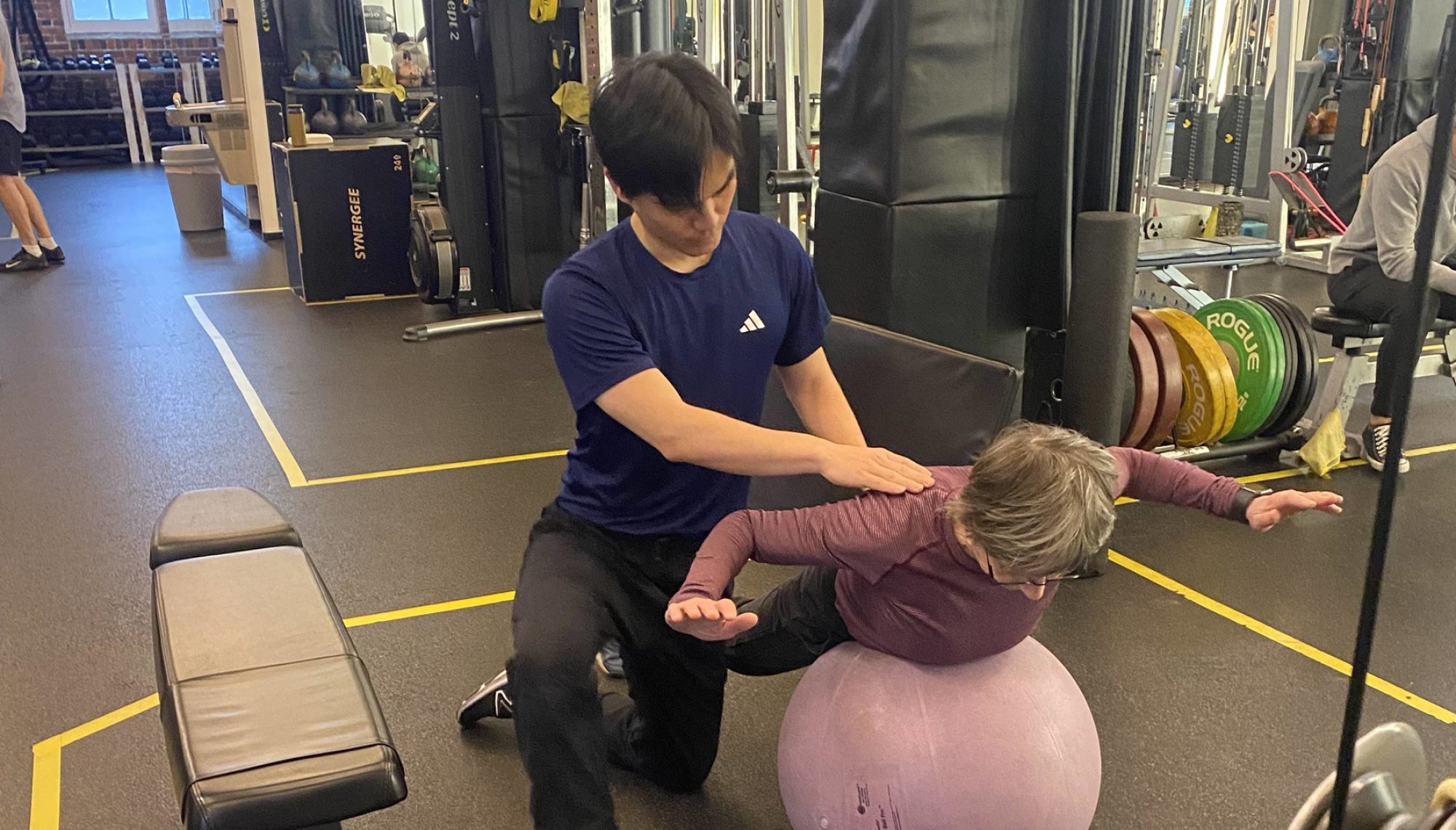
One of my clients has been working with me since May 2025. She started training after being diagnosed with osteoporosis and was determined to fight it naturally—without medication. Her dedication to strength training has led to an incredible transformation, proving that proper exercise can have a profound impact on posture and overall bone health.
Strength vs. Endurance Training for Upper Cross Syndrome
In Part 1, we introduced Upper Cross Syndrome and its postural effects. Here, we’ll examine how strength and endurance training affect posture correction, and why endurance-based exercises are better suited for addressing UCS.
Understanding Upper Cross Syndrome and Why Training Matters
Upper Cross Syndrome (UCS) is a common postural condition caused by an imbalance between tight and elongated muscles in the upper body. Often leading to a kyphotic (rounded upper back) posture, UCS can result in discomfort and mobility issues if left unaddressed. Correcting this condition requires a thoughtful approach to training.
In this two-part series, we’ll explore the importance of understanding UCS and how endurance-based training can effectively improve posture.