Step-ups are a fantastic lower body exercise that mimics real-life movement patterns. But while the traditional forward step-up is widely known and used, the lateral step-up often gets overlooked—despite offering a ton of benefits for hip health, athleticism, and injury prevention.
Let’s break down the differences and why both deserve a place in your training program.
Forward Step-Up (Traditional Step-Up)
Movement:
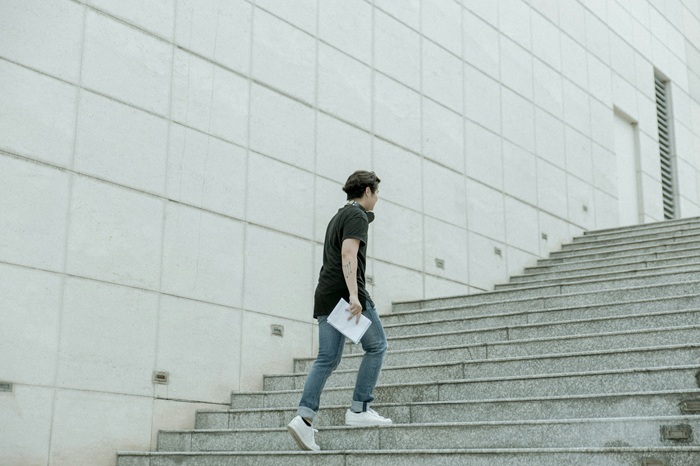
You step forward onto a bench or platform, then drive through your front leg to lift your body up.
Primary Muscles Targeted:
- Quads
- Glutes
- Hamstrings
- Core (for stability)
Key Benefits:
- Builds unilateral strength (one leg at a time)
- Improves balance and coordination
- Mimics functional tasks like climbing stairs or hiking
- Great for overall lower body development and symmetry
Lateral Step-Up (Side Step-Up)
Movement:
You step sideways onto a platform, pushing through the outside leg to lift your body laterally.
Primary Muscles Targeted:
- Gluteus medius & minimus (side glutes)
- Quads
- Adductors (inner thighs)
- Core (especially for lateral stability)
Key Benefits:
- Builds lateral hip strength and pelvic control
- Strengthens the glute med/min, critical for hip stability
- Reduces risk of knee valgus (knees caving in)
- Improves lateral movement for sports, hiking, trail running
- Adds frontal plane training often missing from gym routines
Why Include Lateral Step-Ups?
Most of our workouts—and daily movements—happen in the sagittal plane (forward/backward). But life and sports require strength in all planes, especially the frontal plane (side-to-side).
Lateral step-ups help you:
- Correct movement asymmetries and imbalances
- Improve frontal plane strength and glute activation
- Protect knees and hips by improving how your body handles side-to-side forces
Why Glute Medius/Minimus Fire More in Lateral Step-Ups
The sideways push in a lateral step-up demands hip abduction and pelvic stability, which naturally activates the gluteus medius and minimus.
When you’re on one leg and stepping laterally:
- These muscles stabilize the pelvis and prevent the knee from collapsing inward
- If the stance knee tends to drift medially (valgus), glute med/min have to work even harder
Final Thoughts:
Whether you’re training for strength, mobility, or injury prevention, combining forward and lateral step-ups gives you a more complete and functional lower-body workout.
Want stronger glutes, better knee health, and more athletic movement? Start stepping sideways, too.