
When your goal is to train specific muscles, understanding how those muscles work will help you make better choices and see faster progress. The same principle applies when you want to stretch effectively.
How the Lats Work
The latissimus dorsi—commonly called the lats—contribute to three primary shoulder movements:
- Shoulder extension (pulling your arm down and back)
- Shoulder adduction (pulling your arm toward the body)
- Internal rotation (rotating your arm inward)
Overhand vs. Underhand Grip in Lat Pulldowns
Lat pulldowns are a common and effective way to train your lats. A question I often get is: Which grip is better—overhand or underhand?
The truth is, both work. Shoulder extension (a primary lat function) is involved in both grips. However, with an overhand grip, your shoulder is internally rotated, which is another one of the lat’s functions. This means that using an overhand grip may engage the lats more fully, especially in their shortened position.
Stretching the Lats: Doing the Opposite
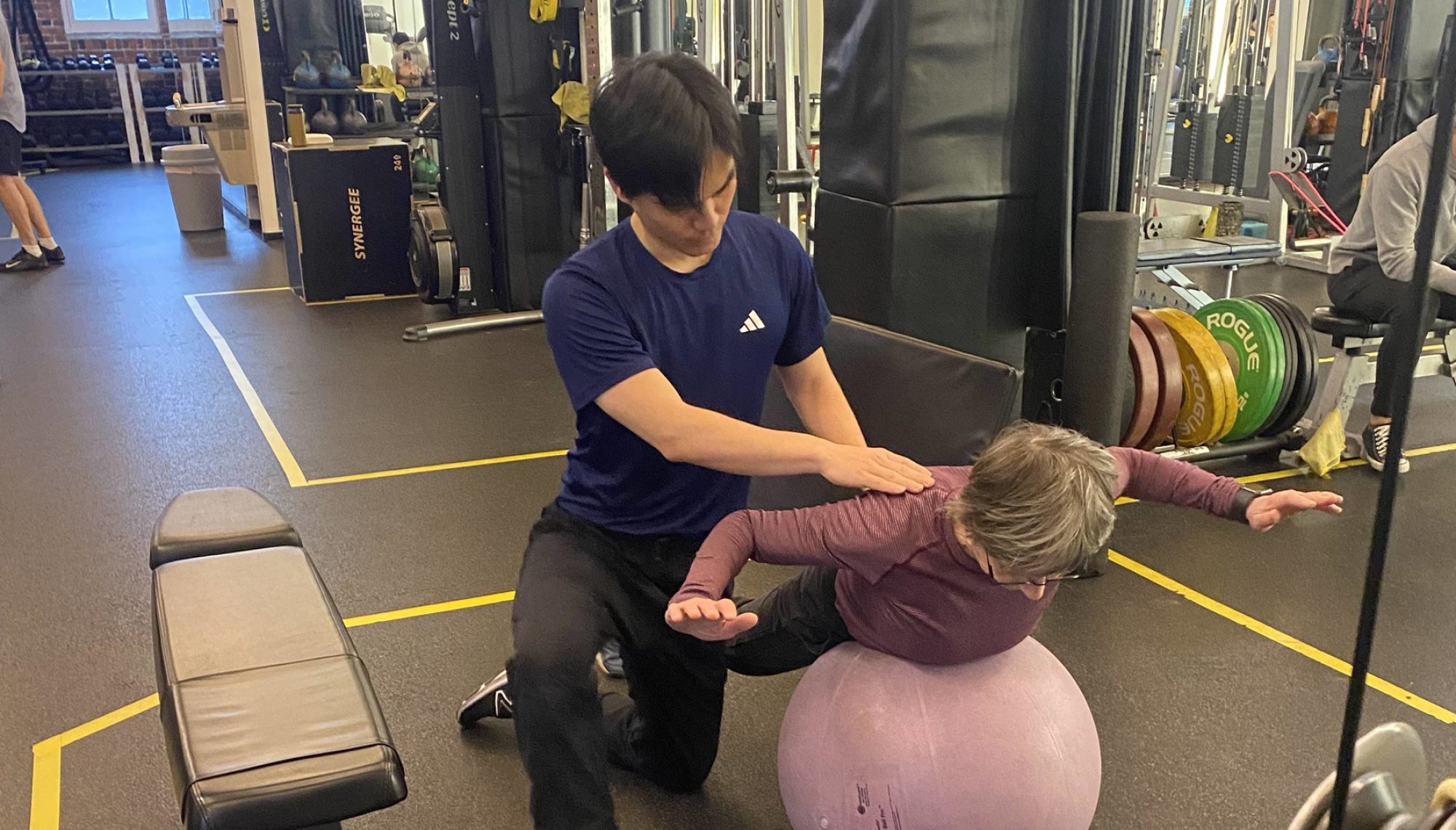
To stretch a muscle, you generally want to do the opposite of its primary actions. I often see people perform a child’s pose variation to stretch their lats, which is a good start. But if you want to take it further:
- Avoid internal rotation
- Instead, bring your arm slightly into external rotation
- Reach diagonally overhead to place the shoulder into abduction
This positioning creates a more complete stretch because it opposes the lat’s natural function.
Contact us for our Personal Training Services