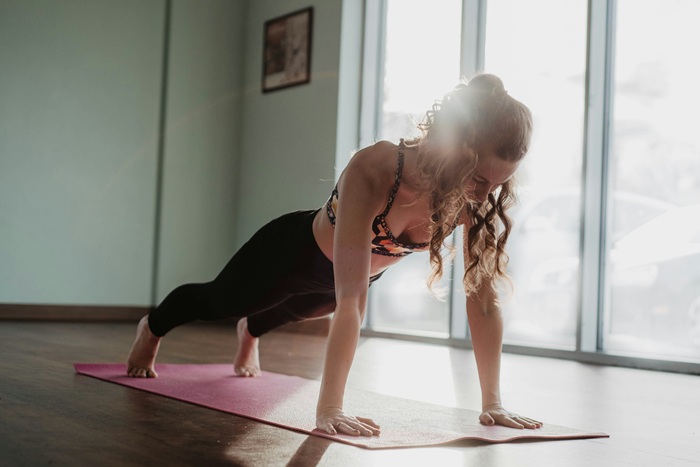
The plank is widely recognized as one of the most effective exercises for developing core stability. But beyond holding a static position, there are variations that can challenge your body in more dynamic and functional ways.
Engage More Than Just Your Abs
Standard planks are great for your entire core—front, back, and sides. By incorporating variations like shoulder taps or reach-outs, you introduce anti-rotation demands, which activate your obliques and improve rotational control.
But the benefits don’t stop there.
Why Hand Planks Are Especially Powerful
When performing a plank on your hands (instead of forearms), the shoulders are also required to stabilize the body. This makes the movement a closed-chain exercise for the upper body, meaning the hands are fixed while the body moves or stabilizes around them.
To maximize benefit and safety in this position, here are two essential cues:
- Scapular Depression:
Draw your shoulder blades down away from your ears to engage the lower traps and lats. This helps prevent neck tension and builds postural strength. - Scapular Protraction:
Push the ground away slightly to spread your shoulder blades apart. This activates the serratus anterior, a key muscle for shoulder health and scapular control.
Together, these cues help you maintain a strong, stable shoulder position and reduce unnecessary stress on the neck and upper traps.
Final Thought
Planks are a foundational movement, but how you perform them—and how you progress them—makes all the difference. Start with mastering proper form, then explore variations that challenge your core, shoulder stability, and total-body control.